![Musical theatre class runs through “Footloose” during their dress rehearsal. Senior student director Mia Morneault says how much she’s enjoyed working with the cast and crew. “I am very proud of all the cast and crew who worked as hard on it as I have. A lot of people care about [this show],” Morneault said. “I have a lot of friends on the cast and on the crew, but I’ve also grown and gained friendships through the show, even as director where I may be a little more stricter than normal. And I am very grateful for everyone I’ve gotten to work with.”](https://cphswolfpack.com/wp-content/uploads/2026/05/DSC_0657-1200x800.jpg)

![Sitting in a line of artwork, senior art student Kaemon Kato’s painting titled “Right Side of History” is displayed for attendees of the district’s art showcase. Kato’s painting is a political piece inspired by a photo of elementary schoolers in the street protesting against ICE. “I think it's also symbolic because they're surrounded by snow, which can represent ICE, and they are still marching,” Kato said. “[The kids] are not stopping until equality or justice is served, which I think is really important to represent and show.” Photo by John Pinion](https://cphswolfpack.com/wp-content/uploads/2026/04/Screenshot-2026-03-26-114740.png)



![Broadcast, yearbook and newspaper combined for 66 Interscholastic League Press Conference awards this year. Yearbook won 43, newspaper won 14 and broadcast took home nine. “I think [the ILPC awards] are a great way to give the kids some acknowledgement for all of their hard work,” newspaper and yearbook adviser Paige Hert said. “They typically spend the year covering everyone else’s big moments, so it’s really cool for them to be celebrated so many times and in so many different ways.”](https://cphswolfpack.com/wp-content/uploads/2025/05/edited-ILPC.jpg)


![Holding up the bi-district champions trophy, junior shortstop Hudson Cuevas cheers alongside his team. The varsity baseball team played in the bi-district round of playoffs against the Boerne Greyhounds April 30-May 2, where they won Game 1 6-4, lost Game 2 2-1 and won the last game 5-2, allowing them to advance to area. “Honestly, [my favorite] big moment that wasn't even part of my moment was Dom's grand slam,” Cuevas said. “That was a big game changer in Game 1 of round one that ultimately helped us win that game and even move on. It set the tone for the games after and has really impacted and sparked this whole playoff run.” Photo by Allie Tseng](https://cphswolfpack.com/wp-content/uploads/2026/05/allie-boerne00159-1200x800.jpg)





![After he takes the handoff, senior running back Trae Hill runs down the field in search of a first down. Hill rushed for three touchdowns in the 43-36 loss against Frisco Wakeland last Friday, but the Timberwolves were eliminated from playoff contention. “[I’m] just happy I got to experience the game with my brothers,” Hill said. “I’m going to remember how close and how enjoyable everything was with these guys. They are my brothers for life. Just waking up and grinding together, and proving the naysayers wrong [was my favorite part].”
Photo by Kyra Cox](https://cphswolfpack.com/wp-content/uploads/2025/11/trae-hill-wakeland.jpg)


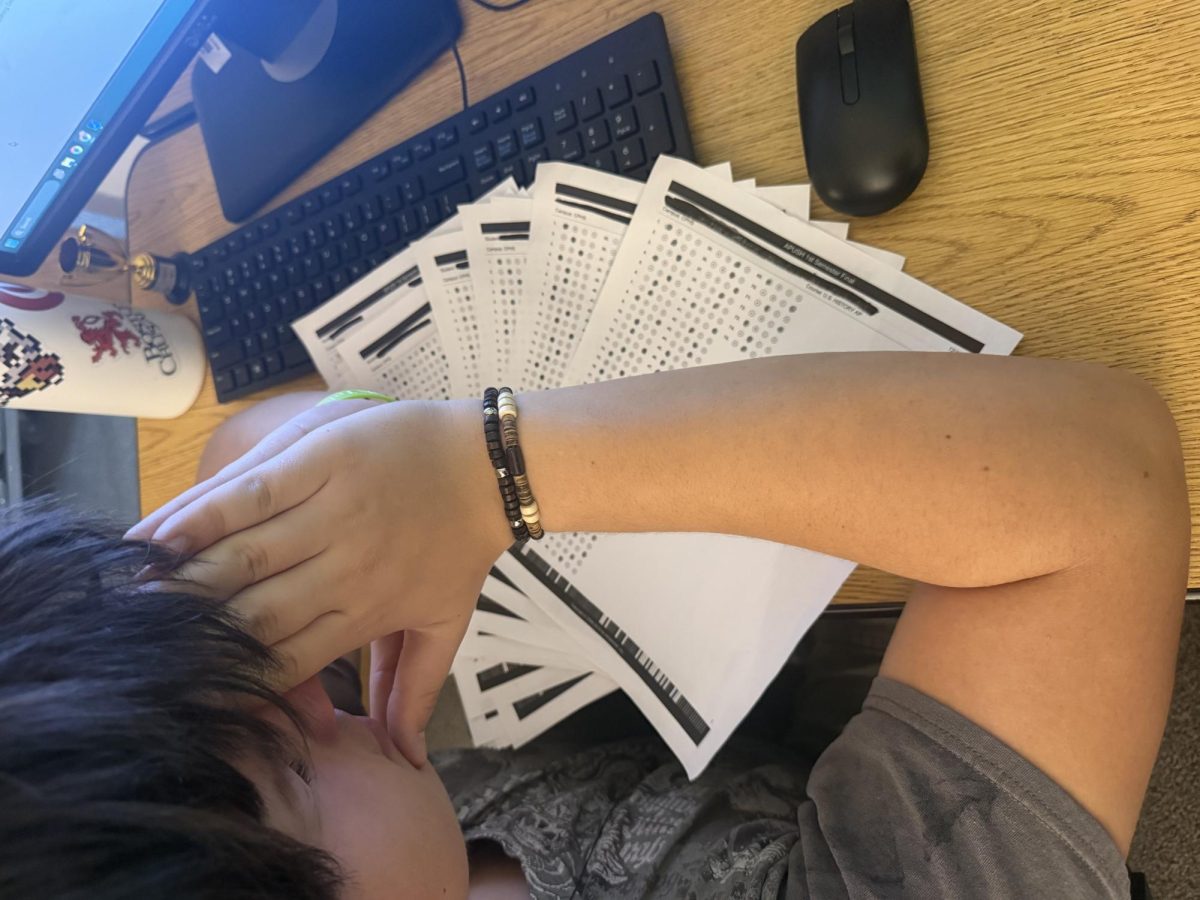
Standardized tests are supposed to measure how well one has learned what the state deems necessary at a given age. Oftentimes though, it measures anything but that. It measures how well of a day you were having. It measures how much money your family is able to provide you for a well-funded education. It measures whether you are allowing your mind to fit in the box and conform.
As Northwestern University economist Joel Mokyr explains, the current American school system was tailor-made to raise factory workers for the newly industrialized nation. It has now been 185 years since the end of the Industrial Revolution. Countless aspects of society have evolved: healthcare, politics, technology, economy, communication and more. So why hasn’t education?
Nordic and Scandinavian countries, like Finland, are widely acclaimed as having the best educational systems in the world. They also do not administer many mandatory standardized tests. It’s quite unlikely that this correlation is coincidental; thereby suggesting that America is not in dire need of standardized testing in order to truly educate students. A more equitable and well-being based system, modeled after these exemplary countries, can be fostered by minimizing testing pressure, giving teachers autonomy in their classrooms and emphasizing holistic growth, which can then cultivate stronger academic performance and allow students to flourish.
The Harvard Opportunity Insights has derived that students from the top 1% income families are roughly 13 times more likely to score a 1300 or higher on the SAT than students in the bottom percentages, which is ironic coming from a school where 15% of students are in that top 1% of income. This cliff of difference makes it hard for truly intelligent students born with the misfortune of poverty to climb academic ranks and compete with students who have been spoon-fed tutors since birth.
This unfortunate reality exposes the true face of the “meritocracy” that standardized testing promises: that these innocent-looking bubble sheets consistently reward privilege instead of aptitude. When test scores so closely follow household income, the exams cease being diagnostic learning tools and become mirrors of access to resources.
What is often ignored is the mental toll this system takes upon its subjects. For students growing up in poverty, standardized testing whispers the incessant message that their circumstances will always speak louder than their curiosity, creativity or drive. The pressure to perform under rigid, high-stakes conditions on one groggy morning disproportionately harms those who are already navigating instabilities like food insecurity, housing crises or family responsibilities. In this sense, standardized testing not only measures inequality, but actively reinforces it.
On the other hand, those who benefit from this passivity are not hard to identify. Testing companies like CollegeBoard, with a convenient monopoly in the testing field, generate billions of dollars annually. School districts that are underfunded, understaffed and undercut can shift blame onto “low-achieving” students rather than confronting the real villain of structural neglect. Standardized testing takes the place of a convenient scapegoat, clean, easy, safe, while the much needed educational reform remains gathering dust.
If the goal of education is to foster capable, informed members of society, then an essential question comes to mind: are standardized testing serving students, or are students serving standardized tests? Other nations have shown that trust in students and educators, an emphasis on holistic development and investments in equity and well-being will yield a brighter generation of pupils.
I have cried over more tests than anything else. Perhaps that means something is innately wrong with me, but perhaps it means something is even more innately wrong with our education system. In the current environmental, political and economic atmosphere of the world we really should be working on solutions, especially as we are the younger generation, destined to inherit the world from its current leaders. But we are distracted, maybe even on purpose, from what really matters by the looming cloud of academic stress hanging over our heads.