![Musical theatre class runs through “Footloose” during their dress rehearsal. Senior student director Mia Morneault says how much she’s enjoyed working with the cast and crew. “I am very proud of all the cast and crew who worked as hard on it as I have. A lot of people care about [this show],” Morneault said. “I have a lot of friends on the cast and on the crew, but I’ve also grown and gained friendships through the show, even as director where I may be a little more stricter than normal. And I am very grateful for everyone I’ve gotten to work with.”](https://cphswolfpack.com/wp-content/uploads/2026/05/DSC_0657-1200x800.jpg)

![Sitting in a line of artwork, senior art student Kaemon Kato’s painting titled “Right Side of History” is displayed for attendees of the district’s art showcase. Kato’s painting is a political piece inspired by a photo of elementary schoolers in the street protesting against ICE. “I think it's also symbolic because they're surrounded by snow, which can represent ICE, and they are still marching,” Kato said. “[The kids] are not stopping until equality or justice is served, which I think is really important to represent and show.” Photo by John Pinion](https://cphswolfpack.com/wp-content/uploads/2026/04/Screenshot-2026-03-26-114740.png)




![Broadcast, yearbook and newspaper combined for 66 Interscholastic League Press Conference awards this year. Yearbook won 43, newspaper won 14 and broadcast took home nine. “I think [the ILPC awards] are a great way to give the kids some acknowledgement for all of their hard work,” newspaper and yearbook adviser Paige Hert said. “They typically spend the year covering everyone else’s big moments, so it’s really cool for them to be celebrated so many times and in so many different ways.”](https://cphswolfpack.com/wp-content/uploads/2025/05/edited-ILPC.jpg)


![Holding up the bi-district champions trophy, junior shortstop Hudson Cuevas cheers alongside his team. The varsity baseball team played in the bi-district round of playoffs against the Boerne Greyhounds April 30-May 2, where they won Game 1 6-4, lost Game 2 2-1 and won the last game 5-2, allowing them to advance to area. “Honestly, [my favorite] big moment that wasn't even part of my moment was Dom's grand slam,” Cuevas said. “That was a big game changer in Game 1 of round one that ultimately helped us win that game and even move on. It set the tone for the games after and has really impacted and sparked this whole playoff run.” Photo by Allie Tseng](https://cphswolfpack.com/wp-content/uploads/2026/05/allie-boerne00159-1200x800.jpg)





![After he takes the handoff, senior running back Trae Hill runs down the field in search of a first down. Hill rushed for three touchdowns in the 43-36 loss against Frisco Wakeland last Friday, but the Timberwolves were eliminated from playoff contention. “[I’m] just happy I got to experience the game with my brothers,” Hill said. “I’m going to remember how close and how enjoyable everything was with these guys. They are my brothers for life. Just waking up and grinding together, and proving the naysayers wrong [was my favorite part].”
Photo by Kyra Cox](https://cphswolfpack.com/wp-content/uploads/2025/11/trae-hill-wakeland.jpg)


Book Review: “Just Mercy”
Stories of Marginalized People and the American Criminal Justice System
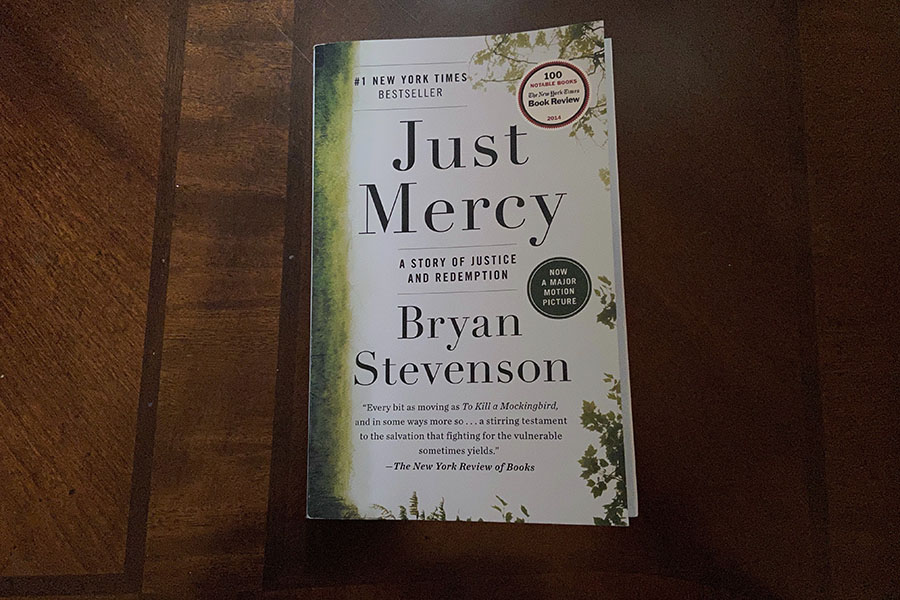
Bryan Stevenson explores how African-Americans are often left unprotected and defenseless by the justice system in “Just Mercy,” a 2014 bestseller.
November 19, 2020
This year for English, the first book all the juniors read was “Just Mercy” by Bryan Stevenson. A New York Times Bestselling novel of 2014, “Just Mercy: A Story of Justice and Redemption” delves into themes of redemption, betrayal and discovery. It explores Bryan Stevenson’s criminal justice organization, the Equal Justice Initiative (EJI), and his career fighting for marginalized communities in the criminal justice system.
The book begins focusing upon his first case with Walter McMillian, a black man sentenced to die for a murder he did not commit. From there, Stevenson would continue to represent individuals from marginalized groups who were often mistreated in the unjust criminal justice system. Stevenson has authored numerous other books, including “4 Days 4 Nights 4 Ladies 4 Guys”; “A Perilous Path: Talking Race, Inequality, and the Law”; “Five Kids and One Gun: A Game to the Death and Hockey Like You Have Never Seen Before.”
Previously, I had read “All-American Boys” and “The Hate U Give,” which chronicled black teenagers grappling with police brutality in their respective communities. Upon being assigned “Just Mercy,” I was eager to learn more about how racism not only manifests itself through police brutality but also throughout the entire criminal justice system. This book — unlike in “The Hate U Give” and “All-American Boys” — is told through the eyes of a lawyer, and not through a victim’s friend. Because of this, readers are allowed to explore the recesses of the legal world to learn more about the specific practices and principles of the criminal justice world that disproportionately harm black and brown people.
“Just Mercy” opens up with Walter McMillian’s trial. A respected black businessman, McMillian fell from grace within his community after having an affair with Karen Kelly, a white woman. McMillian’s relationship with Kelly stoked racial tensions within their community, ultimately leading to a neighbor falsely accusing McMillian of murdering a white woman in Alabama. After persistent pleas from McMillan’s family, Stevenson picked up the case and succeeded in getting a retrial and appeal for McMillian.
For the remainder of his career, Stevenson continued to defend those who were viewed by the criminal justice system as indefensible. Guided by the principle that everyone deserved due process, he represented both the culpable and inculpable, the righteous and unrighteous. For example, Stevenson represented Herbert Richardson — a man who was accused of leaving a bomb outside his ex-girlfriend’s house — while also defending Joe Sullivan, a man who was falsely accused of raping a woman. No matter the circumstances, Stevenson approached all of his defendants with both fairness and tact — two qualities that black-Americans are not always shown in the criminal justice system.
“Just Mercy” is a standout book due to Stevenson’s keen ability to tell the stories of those whose stories often go untold. Stevenson writes in a conversational tone, making the stories he tells open and accessible to a wide variety of people, regardless of age or educational background. He evokes empathy from his readers by using pointed and descriptive language. Furthermore, he provides painstaking details about the life of the incarcerated and their experiences in the criminal justice system. In doing this, he does a good job humanizing incarcerated populations who are often poorly portrayed in the media. Since injustice in the criminal justice system is a heavy topic, Stevenson balances his writing by also injecting lighthearted anecdotes within the pages of “Just Mercy.” He recounts jovial conversations with his grandfather and laughs he has shared with Rosa Parks. Ultimately, these moments help to tame the immense emotionality of this book.
Though Stevenson does a good job of recounting his cases, it is worth noting that these cases occurred 30 years prior to him writing the book. This then raises questions about the accuracy of the events Stevenson presented throughout the novel. Despite this minor blip, Stevenson still delivers a powerful account of the racial injustice rampant in the criminal justice system.
I would rate this book four out of five stars because I like the cases that he chose. Stevenson made many voices heard, when nobody was willing to help them. Although his book is about the criminal justice system, he doesn’t describe much about himself, so we know very little about him.
This book could be read by high schoolers and above and readers can find the book on Amazon for $10.27 and Barnes & Nobles for $17.